
Why the National Lithuanian Flag is so significant: History and Meaning
The Lithuanian Flag: A Symbol of National Pride and Resilience
The flag of Lithuania is more than just a piece of cloth; it’s a powerful emblem that encapsulates the spirit, history, and aspirations of the Lithuanian people. This article will take you on a fascinating journey through the origins, meaning, and significance of the Lithuanian flag. Whether you’re a history buff, a vexillology enthusiast, or simply curious about world cultures, you’ll find intriguing insights into how this tricolor banner has become an enduring symbol of Lithuanian identity and independence.
What does the Lithuanian flag look like?
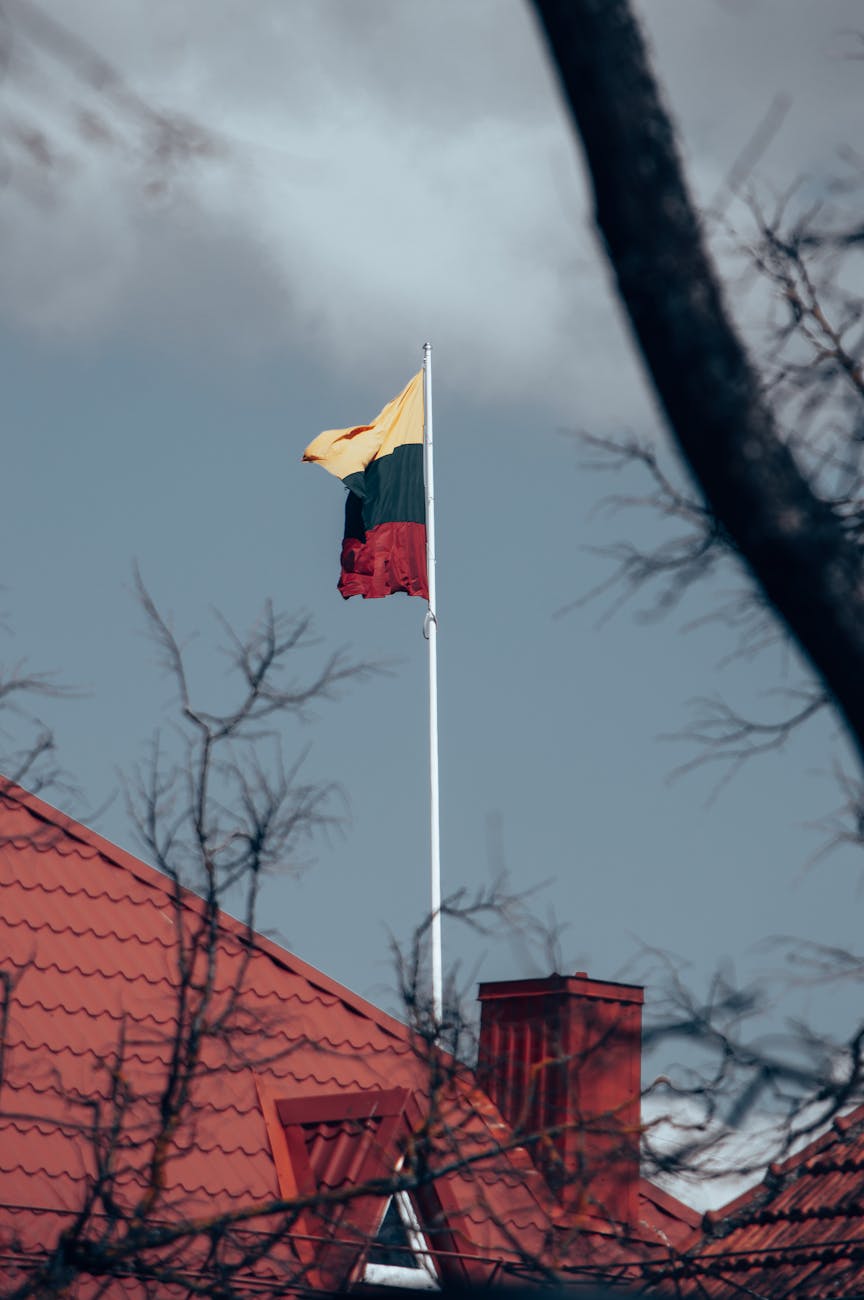
The national flag of Lithuania consists of three horizontal stripes of equal width. From top to bottom, the colors are yellow, green, and red. This tricolor design is simple yet striking, making it easily recognizable among the flags of the world.
The yellow stripe at the top represents the golden fields of Lithuania and the country’s prosperity. The green stripe in the middle symbolizes the lush forests and countryside that cover much of the nation, as well as hope and freedom. The red stripe at the bottom stands for the blood shed by Lithuanians in their fight for independence and the courage of the people.
These colors have deep historical and cultural significance for Lithuanians, and their combination in the flag creates a powerful visual representation of the country’s values and natural beauty.
What is the history behind the Lithuanian flag?
The history of the Lithuanian flag is closely intertwined with the nation’s struggle for independence and identity. The current design of the flag was officially adopted on April 25, 1918, shortly after Lithuania declared its independence from the Russian Empire.
However, the roots of this tricolor flag go back even further. The combination of yellow, green, and red colors was first used in Lithuanian folk art and traditional dress. In the early 20th century, these colors began to be associated with the Lithuanian national movement.
During the Great Seimas of Vilnius in 1905, Lithuanian activists proposed using these colors for a national flag. The idea gained traction, and by 1917, the Council of Lithuania approved the tricolor design as the national flag.
It’s worth noting that during periods of foreign occupation, particularly under Soviet rule from 1940 to 1991, the use of the Lithuanian flag was prohibited. Despite this, the flag remained a powerful symbol of resistance and national identity for Lithuanians.
How has the Lithuanian flag changed over time?
While the basic design of the Lithuanian flag has remained consistent since its adoption in 1918, there have been some variations and changes in its use over the years.
During the period of the Grand Duchy of Lithuania, which existed from the 13th to the 18th centuries, a different flag was used. This historical flag featured a white knight on a red background, known as the Vytis or “the Chaser.” This symbol is still used today as the coat of arms of Lithuania.
Under Soviet occupation from 1940 to 1991, Lithuania was forced to use the flag of the Lithuanian Soviet Socialist Republic. This flag was red with a small golden hammer and sickle in the upper left corner, along with the letters “LTSR” (Lithuanian SSR) below.
When Lithuania regained its independence in 1991, the yellow, green, and red tricolor was restored as the national flag. Since then, there have been minor adjustments to the specific shades of colors used, but the overall design has remained the same.
What are the rules for displaying the Lithuanian flag?
The display of the Lithuanian flag is governed by the Law on the National Flag and Other Flags of the Republic of Lithuania. This law sets out specific rules for when and how the flag should be flown.
According to the law, the flag must be displayed on government buildings on all national holidays. It’s also flown at diplomatic missions, border checkpoints, and on ships sailing under the Lithuanian flag.
The flag should be hoisted at sunrise and lowered at sunset. If displayed at night, it must be properly illuminated. When displayed vertically, the yellow stripe should be on the left side when viewed from the front.
The law also stipulates that the ratio of the width of the flag of Lithuania to its length should be 3:5, and if the width is 1 meter, the length should be 1.7 meters.
It’s important to note that the flag should always be treated with respect. It should never touch the ground or water, and when it becomes worn or faded, it should be disposed of in a dignified manner, preferably by burning.
Are there any special variations of the Lithuanian flag?
Yes, there are several special variations of the Lithuanian flag used for specific purposes:
-
- The State Flag: This is a variant of the national flag that includes the coat of arms (the white knight on a red background) in the center. It’s used by certain state institutions and the President of the Republic.
-
- The Historical State Flag: This is the red flag with the white knight (Vytis) that was used by the Grand Duchy of Lithuania. It’s now used alongside the national tricolor on certain occasions.
-
- The Flag of the President: This is a red flag with the coat of arms in the center, surrounded by a golden border. It’s flown at the official residence of the President.
-
- The Naval Ensign: Used by the Lithuanian Navy, this flag features the national tricolor with a blue anchor in the upper left corner.
These special flags are used in addition to the national tricolor and serve to represent specific aspects of Lithuanian statehood and governance.
What is the significance of the Lithuanian flag colors?
The colors of the Lithuanian flag – yellow, green, and red – each carry deep symbolic meaning:
Yellow represents the sun, light, and prosperity. It’s associated with the golden fields of wheat that are a common sight in the Lithuanian countryside. This color symbolizes the nation’s agricultural heritage and its hopes for a bright future.
Green symbolizes the country’s lush forests, fields, and natural beauty. Lithuania is known for its stunning landscapes, and this color represents the connection between the people and their land. Green also stands for hope, freedom, and the nation’s vitality.
Red represents the blood shed by Lithuanians in their fight for independence. It symbolizes courage, bravery, and the sacrifices made for the nation’s freedom. Red is also associated with the vibrant spirit of the Lithuanian people.
Together, these colors create a powerful visual representation of Lithuania’s past, present, and future. They encapsulate the nation’s history, natural beauty, and the enduring spirit of its people.
How is the Lithuanian flag used in everyday life?
The Lithuanian flag plays a significant role in everyday life in Lithuania. It’s not just a symbol reserved for official state functions but is deeply ingrained in the national consciousness.
On national holidays, it’s common to see the flag displayed on private homes, businesses, and public spaces. Many Lithuanians take pride in displaying the flag, seeing it as a way to express their national identity and patriotism.
The flag is also prominently featured at sporting events, particularly when Lithuanian athletes are competing internationally. It’s a common sight at basketball games, where fans often wave small handheld flags to support their team.
In schools, children learn about the flag’s history and significance as part of their civic education. Many schools display the flag prominently, and it’s often raised during special school events.
The flag’s colors are also incorporated into various aspects of Lithuanian culture, from traditional costumes to modern design and branding. This widespread use of the flag and its colors helps reinforce national identity and unity.
How does the Lithuanian flag compare to other Baltic flags?
The Lithuanian flag shares some similarities with the flags of its Baltic neighbors, Estonia and Latvia, but also has distinct differences:
The Estonian flag consists of three horizontal stripes of blue, black, and white. The Latvian flag is red with a white horizontal stripe in the middle.
While all three flags use horizontal stripes, Lithuania is the only one to use yellow in its design. The use of green is also unique among the Baltic flags.
Interestingly, the Lithuanian flag is the only one of the three that doesn’t include the color white. This makes it stand out visually from its Baltic counterparts.
Despite these differences, all three flags share a common history of being symbols of national identity and resistance during periods of foreign occupation. They were all banned during the Soviet era and were enthusiastically restored when the countries regained independence in the early 1990s.
What role did the flag play in Lithuania’s independence movement?
The Lithuanian flag played a crucial role in the country’s independence movement, particularly during the late 1980s and early 1990s as the Soviet Union began to collapse.
During the Soviet occupation, displaying the Lithuanian tricolor was strictly forbidden and could result in severe punishment. Despite this, many Lithuanians kept small flags hidden in their homes as a symbol of their hope for future independence.
As the independence movement gained momentum in the late 1980s, the flag became a powerful symbol of resistance. In 1988, during the early stages of the movement, protesters began openly displaying the tricolor at rallies and demonstrations.
One of the most iconic moments came on August 23, 1989, when approximately two million people joined hands to form a human chain spanning over 600 kilometers across the three Baltic states. This event, known as the Baltic Way, saw countless Lithuanian flags waved in defiance of Soviet rule.
When Lithuania officially declared the restoration of its independence on March 11, 1990, the tricolor flag was raised over the Supreme Council building in Vilnius, marking a historic moment in the nation’s history.
How can I learn more about Lithuanian culture and language?
If you’re interested in learning more about Lithuanian culture and language, there are many resources available. Libraries and bookstores often have sections dedicated to world cultures or Eastern European studies where you can find books about Lithuania’s history, traditions, and language.
Online resources such as language learning apps and websites can be great tools for beginning to learn the Lithuanian language. Many universities also offer courses in Baltic studies or Lithuanian language and culture.
For those who need professional language services, LanguageXS offers interpretation and translation services for Lithuanian and over 240 other languages and dialects. Our document translation service is available at $0.10 per word with a minimum order of $25, and we can complete most translations in less than 7 days.
We primarily provide interpretation between English and other languages, but we also offer interpretation services between some non-English language pairs. For those interested in sign language, we offer American Sign Language (ASL) video interpreting at $40 per 15-minute unit.
Learning about the Lithuanian flag is just the beginning of understanding this rich and fascinating culture. Whether you’re planning a trip to Lithuania, have Lithuanian heritage, or are simply curious about different cultures, exploring Lithuanian language and traditions can be a rewarding experience.
Key takeaways:
-
- The Lithuanian flag consists of three horizontal stripes: yellow, green, and red.
-
- Each color has symbolic meaning: yellow for prosperity, green for hope and nature, red for courage and sacrifice.
-
- The current design was officially adopted in 1918 but has roots in earlier Lithuanian folk art and national movements.
-
- The flag was banned during Soviet occupation but remained a powerful symbol of resistance.
-
- There are special variations of the flag for state use, including one featuring the historical coat of arms.
-
- The flag plays a significant role in Lithuanian daily life and national identity.
-
- LanguageXS offers professional translation and interpretation services for Lithuanian and many other languages.
Frequently Asked Questions: Lithuanian Language
How can LanguageXS help with Lithuanian language services?
LanguageXS offers both document translation and over-the-phone interpretation services for Lithuanian. This can be particularly useful for Lithuanian speakers needing assistance with English or other languages.
What is the cost of Lithuanian document translation with LanguageXS?
LanguageXS provides document translation services at $0.10 per word, with a minimum order of $25. Most translations are completed in less than 7 days.
Can LanguageXS provide interpretation between Lithuanian and languages other than English?
While LanguageXS primarily offers interpretation between English and other languages, they do provide some language pair options that don’t include English. It’s best to contact them directly for specific language pair availability.
How does the Lithuanian flag differ from other Baltic country flags?
The Lithuanian flag is unique among Baltic flags for its use of yellow and green. Estonia’s flag is blue, black, and white, while Latvia’s is red and white.
Are there any special variations of the Lithuanian flag?
Yes, there are several special variations, including the State Flag (which includes the coat of arms), the Historical State Flag (red with a white knight), and the Flag of the President.
How can LanguageXS services benefit the Lithuanian-speaking community?
These services can help Lithuanian speakers communicate more effectively in various settings, such as healthcare, legal, and business environments, as well as assist with document translation for education or immigration purposes.