
Carolinian Language and People of the Northern Mariana Islands
Carolinian: The Pulse of the Northern Mariana Islands
Carolinian is a vibrant language that beats at the core of the Northern Mariana Islands. This captivating language, with its deep-rooted history and lively present, offers a glimpse into the rich culture and heritage of the Carolinian people. Whether you’re intrigued by unique languages or interested in the diverse linguistic tapestry of Micronesia, the world of Carolinian has much to offer and inspire.
Where is Carolinian spoken?
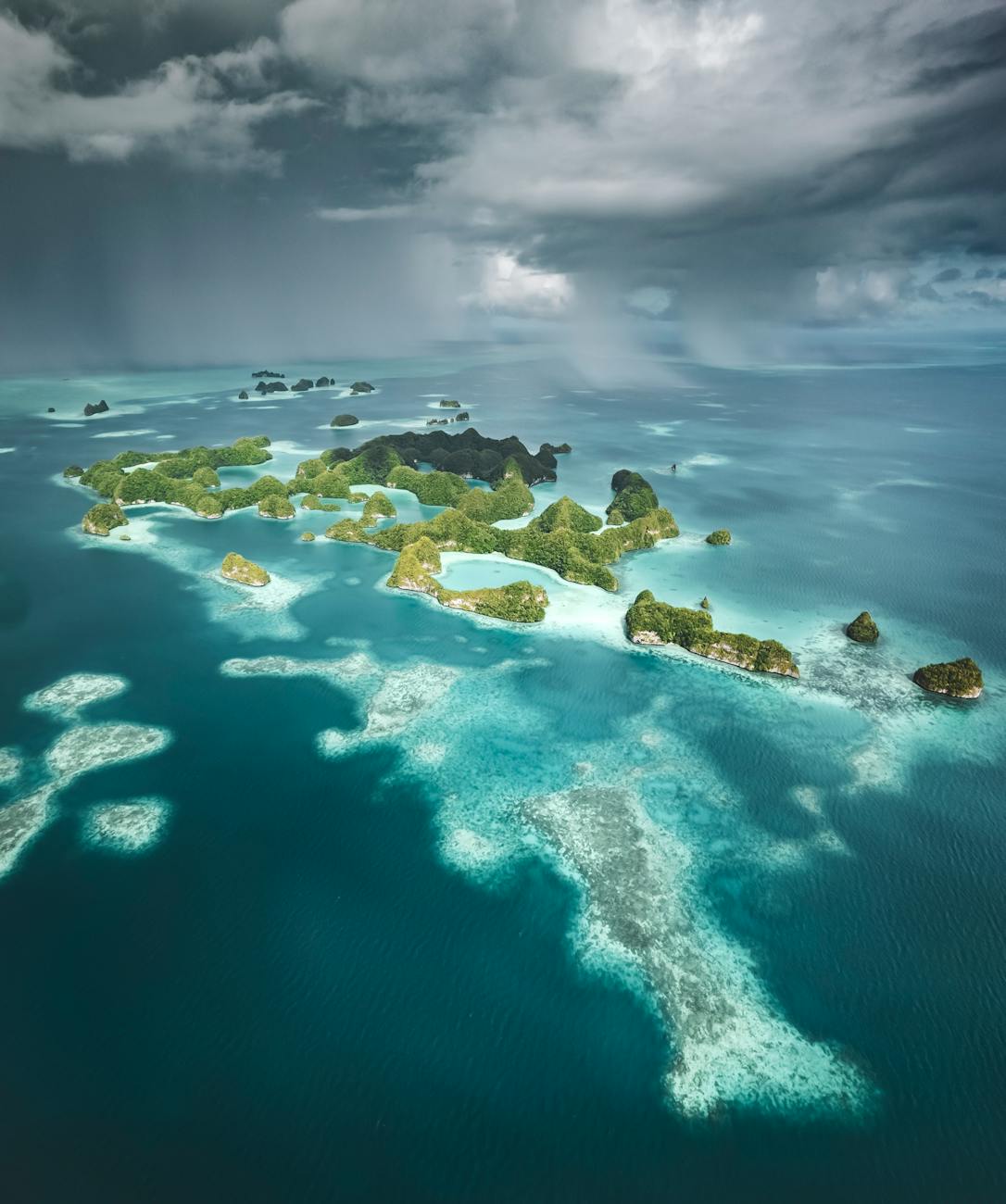
Carolinian is primarily spoken in the Northern Mariana Islands, a U.S. commonwealth in the western Pacific Ocean. The language finds its strongest presence on the island of Saipan, which serves as the capital of the Northern Mariana Islands. However, Carolinian speakers can also be found on other islands in the commonwealth, including Tinian and Agrigan.
The story of how Carolinian came to be spoken in the Marianas is a tale of migration and resilience. The language originates from the Caroline Islands, a scattered archipelago in Micronesia. In the early 19th century, a series of devastating typhoons struck the Caroline Islands, forcing many inhabitants to seek new homes. Some of these displaced Carolinians made the perilous journey north to Saipan, where they were granted permission to settle by the Spanish colonial authorities.
Today, Carolinian exists alongside Chamorro (the language of the indigenous Chamorro people) and English as one of the official languages of the Northern Mariana Islands. This linguistic diversity reflects the complex cultural tapestry of the Marianas, where different peoples and traditions have intertwined over centuries.
What kind of language is Carolinian?
Carolinian belongs to the vast Austronesian language family, which includes languages spoken across Southeast Asia and the Pacific Islands. More specifically, it’s classified as a Micronesian language, part of the Chuukic branch of the Micronesian languages.
The Carolinian spoken in the Northern Mariana Islands is often referred to as Saipan Carolinian to distinguish it from the varieties still spoken in the Caroline Islands. It’s important to note that Carolinian isn’t a single, monolithic language but rather a continuum of closely related dialects. These dialects reflect the diverse origins of the Carolinian settlers, who came from different islands in the Carolines.
Linguists have identified several main dialects within Saipan Carolinian, including those influenced by languages like Woleaian, Satawalese, and Chuukese. Despite these variations, speakers of different Carolinian dialects can generally understand each other, much like speakers of different Spanish or Arabic dialects.
How many people speak Carolinian?
Estimating the exact number of Carolinian speakers can be challenging due to the language’s complex dialectal situation and the multilingual nature of the Northern Mariana Islands. However, according to recent estimates, there are approximately 3,000 to 4,000 native speakers of Carolinian.
Most of these speakers are concentrated on Saipan, particularly in communities like Tanapag, which has historically been a stronghold of Carolinian culture. However, it’s worth noting that many Carolinians are multilingual, often speaking Chamorro and English in addition to their native language.
Despite its official status, Carolinian is considered a threatened language according to UNESCO’s classification. This is due to various factors, including the increasing dominance of English in education and public life, as well as shifting cultural and economic pressures. However, efforts are being made to preserve and promote the language, including educational initiatives and cultural programs.
What does Carolinian sound like?
To the untrained ear, Carolinian might sound similar to other Micronesian languages like Chuukese or Woleaian. However, it has its own unique sound profile that sets it apart. Carolinian is known for its rich system of consonants and vowels, which can be challenging for non-native speakers to master.
One of the most distinctive features of Carolinian pronunciation is its use of geminate (doubled) consonants. These are consonants that are held for a longer duration than single consonants and can change the meaning of words. For example, the word “imwu” (meaning “your house”) is distinguished from “immwu” (meaning “your drinking coconut”) only by the length of the ‘m’ sound.
Carolinian also has some sounds that don’t exist in English. For instance, it has a sound represented in the International Phonetic Alphabet (IPA) as [ŋ], which is similar to the ‘ng’ at the end of English words like “sing”, but can also occur at the beginning of words in Carolinian. There’s also a sound represented as [β], which is like a ‘v’ sound made with both lips instead of the lower lip and upper teeth.
The language also features a system of vowel harmony, where certain vowels in a word influence the pronunciation of other vowels. This creates a harmonious sound that is characteristic of many Micronesian languages.
How is Carolinian written?
The Carolinian writing system is based on the Latin alphabet, much like English. However, it includes some additional letters and diacritical marks to represent sounds that are unique to the language. The current orthography (writing system) for Carolinian was developed in the late 20th century, with significant input from Carolinian speakers and linguists.
The Carolinian alphabet consists of 22 letters: a, á, å, b, ch, e, é, f, g, gh, i, k, l, m, mw, n, ng, o, ó, p, pw, r, s, sch, t, u, ú, w, y. Some of these, like ‘gh’, ‘mw’, ‘ng’, ‘pw’, and ‘sch’, represent single sounds in Carolinian that require multiple letters to write in English.
The acute accent (´) is used over vowels to indicate stress, while the ring diacritic (˚) over ‘a’ represents a different vowel sound. The letter ‘g’ is always pronounced as a ‘ng’ sound, even at the beginning of words.
This writing system allows for accurate representation of Carolinian phonology while maintaining some consistency with English orthography, which is also widely used in the Northern Mariana Islands.
What are some unique features of Carolinian grammar?
Carolinian grammar has several interesting features that set it apart from languages like English or Chamorro. One of the most notable is its complex system of possessive classifiers. In Carolinian, when you’re talking about possessing something, you have to use a specific word depending on the nature of the possessed object. For example, there are different possessive classifiers for food, drinks, vehicles, and general objects.
Another fascinating aspect of Carolinian grammar is its use of reduplication. This is a process where all or part of a word is repeated to change its meaning. For instance, the word “bwute” means “to close”, but “bwubwute” means “to close repeatedly”. This feature allows for nuanced expression of repeated or intensified actions.
Carolinian also has an inclusive/exclusive distinction in its first person plural pronouns. This means there are different words for “we” depending on whether the person being spoken to is included or not. This feature, while unfamiliar to English speakers, is common in many Pacific languages.
How has Carolinian been influenced by other languages?
The Carolinian language, like many others, has been shaped by its contact with other languages over time. Given its history and geographic location, it’s not surprising that Carolinian has borrowed words and concepts from several sources.
One significant influence comes from Chamorro, the other indigenous language of the Northern Mariana Islands. As Carolinians and Chamorros have lived side by side for generations, there has been a natural exchange of words and expressions. For example, the Carolinian word “kelascho” (meaning “to walk quickly”) is believed to be borrowed from Chamorro.
Spanish, due to the colonial history of the Mariana Islands, has also left its mark on Carolinian. Words like “kånta” (to sing) and “siya” (chair) are clearly of Spanish origin, though they’ve been adapted to fit Carolinian phonology.
In more recent times, English has become a major source of loanwords in Carolinian, particularly for modern concepts and technologies. However, these borrowed words are often modified to fit Carolinian sound patterns and grammatical structures.
Japanese has also contributed some vocabulary, particularly during the period of Japanese administration of the Northern Mariana Islands in the early 20th century. For instance, the Carolinian word “zoori” (meaning slipper) comes from Japanese.
What efforts are being made to preserve Carolinian?
Despite the challenges facing the Carolinian language, there are numerous efforts underway to preserve and promote it. These initiatives range from grassroots community projects to government-supported programs.
In the Northern Mariana Islands, Carolinian is taught in schools alongside English and Chamorro. There are also Carolinian language media outlets, including radio programs and newspaper columns. These help to keep the language alive in the public sphere and provide essential resources for language learners.
Cultural events and festivals often feature Carolinian language performances, helping to raise its profile and prestige. The Carolinian Affairs Office, a government agency, works to promote and preserve Carolinian language and culture.
Academic efforts to document and study the language are also ongoing. The University of Hawaii at Manoa, for example, has been involved in projects to create Carolinian language materials, including a Carolinian-English dictionary.
Digital technology is playing an increasing role in language preservation efforts. Online resources for learning Carolinian are becoming more common, and social media platforms allow Carolinian speakers from different islands to connect and share their language.
What role does Carolinian play in modern Carolinian culture?
Despite the challenges it faces, the Carolinian language continues to play a crucial role in Carolinian culture. It’s seen as a key element of Carolinian identity, connecting modern Carolinians with their heritage and traditions.
Carolinian is used in traditional ceremonies and rituals, in folk songs and stories, and in contemporary Carolinian literature. Even for Carolinians who may not speak the language fluently, knowing some Carolinian words and phrases is often seen as an important part of cultural identity.
The language also serves as a link between Carolinians living in the Northern Mariana Islands and those still in the Caroline Islands. Despite centuries of separation, the shared linguistic heritage helps maintain cultural connections across vast distances of ocean.
In the multilingual context of the Northern Mariana Islands, the ability to speak Carolinian is often a source of pride. It distinguishes Carolinians from other groups and helps maintain a sense of community identity.
How can I learn more about Carolinian?
If you’re intrigued by the Carolinian language and want to learn more, there are several avenues you can explore. While Carolinian may not be as widely taught as some other languages, resources are available for the curious learner.
The Northern Marianas College occasionally offers Carolinian language courses. For those unable to attend in-person classes, there are some online resources available, including language learning apps and websites dedicated to Micronesian languages.
For a deeper dive into the structure and history of the language, linguistic texts and grammars of Carolinian are available. The works of scholars like Frederick H. Jackson and Jeffrey C. Marck provide valuable insights into the language’s features and development.
Engaging with Carolinian culture through music, literature, and film can also provide a more immersive way to connect with the language. Many traditional Carolinian songs are available online, often with translations, offering a melodic introduction to the language.
At LanguageXS, we’re committed to making languages like Carolinian more accessible. We offer convenient over-the-phone interpretation and online translation services for the Carolinian-speaking community. These services not only help Carolinian speakers communicate more easily in a variety of settings but also contribute to the preservation and promotion of the language. By making information more accessible in Carolinian, we hope to foster inclusivity and support the continued vitality of this fascinating language.
Key points to remember about the Carolinian language:
-
- Carolinian is an Austronesian language spoken primarily in the Northern Mariana Islands, especially on Saipan.
-
- It originated in the Caroline Islands and was brought to the Marianas by migrants in the 19th century.
-
- Carolinian is one of the official languages of the Northern Mariana Islands, alongside Chamorro and English.
-
- The language has several dialects and is part of a continuum of closely related Micronesian languages.
-
- Carolinian has unique phonological features, including geminate consonants and vowel harmony.
-
- The Carolinian writing system uses the Latin alphabet with additional letters and diacritical marks.
-
- The language has been influenced by Chamorro, Spanish, English, and Japanese.
-
- Efforts are being made to preserve and promote Carolinian through education, media, and cultural initiatives.
-
- Carolinian plays a crucial role in maintaining Carolinian cultural identity.
-
- Resources for learning Carolinian are available, including courses, books, and online materials.
Frequently Asked Questions:
What is LanguageXS?
LanguageXS is a company providing over-the-phone interpretation and online translation services for various languages, including Carolinian.
Why might I need Carolinian language services?
You might need these services for medical appointments, legal matters, business interactions, or any situation where communication between Carolinian and non-Carolinian speakers is necessary.
How does over-the-phone interpretation work?
When you call LanguageXS, a professional interpreter joins the call to facilitate communication between Carolinian speakers and those who don’t speak the language.
Is LanguageXS familiar with Carolinian dialects?
Yes, our interpreters are knowledgeable about various Carolinian dialects, including those influenced by Woleaian, Satawalese, and other Micronesian languages.
Can LanguageXS help with written translations?
Absolutely. We offer online translation services for documents, websites, and other written materials to and from Carolinian.
Are your services available 24/7?
Yes, our over-the-phone interpretation service is available round the clock to accommodate different time zones and urgent needs.
How quickly can I get connected to a Carolinian interpreter?
We strive to connect you with a Carolinian interpreter within minutes of your call.
Do you offer services for other languages of the Northern Mariana Islands?
Yes, besides Carolinian, we also provide services for Chamorro and 240+ other languages.
Is my information kept confidential?
LanguageXS adheres to strict confidentiality protocols to protect your privacy and sensitive information.
How can I learn more about your Carolinian language services?
Visit our website or contact our customer service team for more information about our Carolinian interpretation and translation services.